
Advanced Superplastic Forming & Diffusion Bonding | SPF Press Series
Superplastic Forming Press
BITAERON’s Superplastic Forming Press platform redefines thermal stability up to 1,100°C (1,050°C precise process window at ±5°C) and micro-speed motion control down to 0.2 mm/s. Powered by a multi-channel ±0.01 MPa closed-loop gas/vacuum array, it ensures zero-defect diffusion bonding and zero-springback forming for advanced multi-sheet titanium and superalloy components.
What is SUPERPLASTIC FORMING PRESS?
For forming high-strength aerospace alloys, traditional cold forming and hot forming are common methods. However, Superplastic Forming (SPF) enables titanium alloys at elevated temperatures (850℃–920℃) and controlled slow strain rates to achieve complex curved geometries and deep cavities in a single operation with near-zero springback. A Superplastic Forming Press (SPF/DB Press) leverages this physical mechanism to perform simultaneous diffusion bonding and gas blow-forming across multi-sheet assemblies.
At room temperature, titanium alloys suffer from low ductility, severe springback, and difficult welding. Superplastic Forming (SPF) and Diffusion Bonding (SPF/DB) solve these limits via seamless atomic joints at extreme high temperatures.SPF gas-forms complex curves and deep cavities in one step with zero springback—reducing weight, material waste, and costs.
At extreme temperatures, Superplastic Forming (SPF) solves the challenge of shaping complex geometries, while Diffusion Bonding (DB) enables solid-state atomic fusion to seamlessly join materials into a single unit.
In real-world production and machine engineering for an SPF/DB Press, the technical barriers, narrow process window, and control complexity of diffusion bonding are far higher than those of superplastic forming.
Superplastic Forming Press also named: SPF Press, SPF/DB Press, Superplastic Forming / Diffusion Bonding Press, Superplastic Forming Hydraulic Press, High-Temperature Gas Blow Forming Press for SPF.
BITAERON SPF PRESS OPENS UP AEROSPACE FORMING POSSIBILITIES NEVER BEFORE POSSIBLE
HOW STUFF WORKS
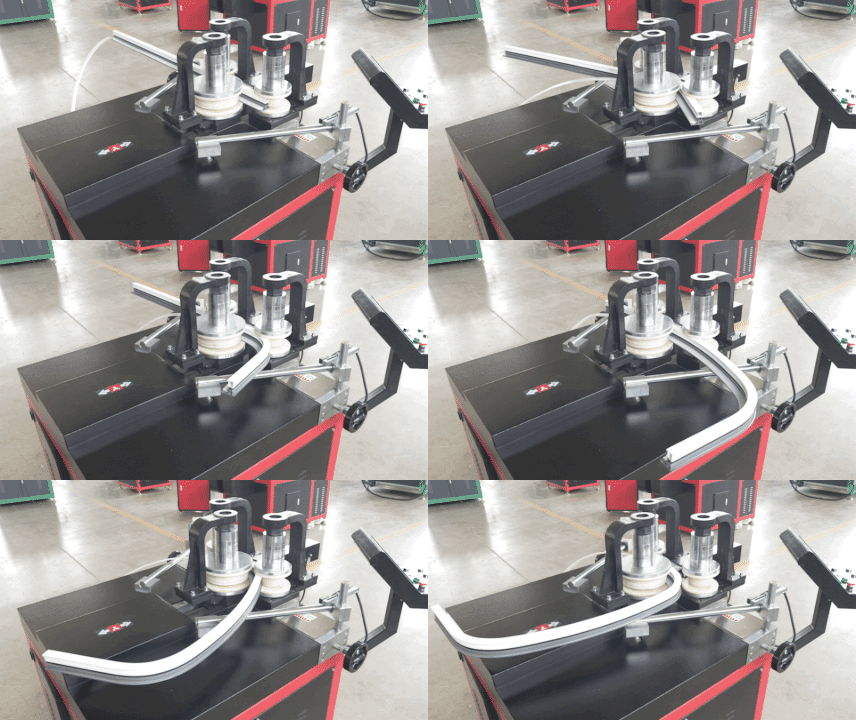
During superplastic forming, high-pressure argon gas forces a heated metal sheet into a shaped die at extreme temperatures. The material stretches like plastic balloon skin without breaking, perfectly conforming to complex die cavities.
A primary high-temperature titanium Superplastic Forming Press is an SPF/DB machine. By inflating high-pressure argon gas into the sealed die cavity, it forces heated titanium against the mold walls to achieve complex geometries.
The technological innovations, process precision, high-temperature stability, and zero-springback forming performance of the SPF Press Series make it stand out in advanced titanium aerospace applications.
USES OF SUPERPLASTIC FORMING PRESS
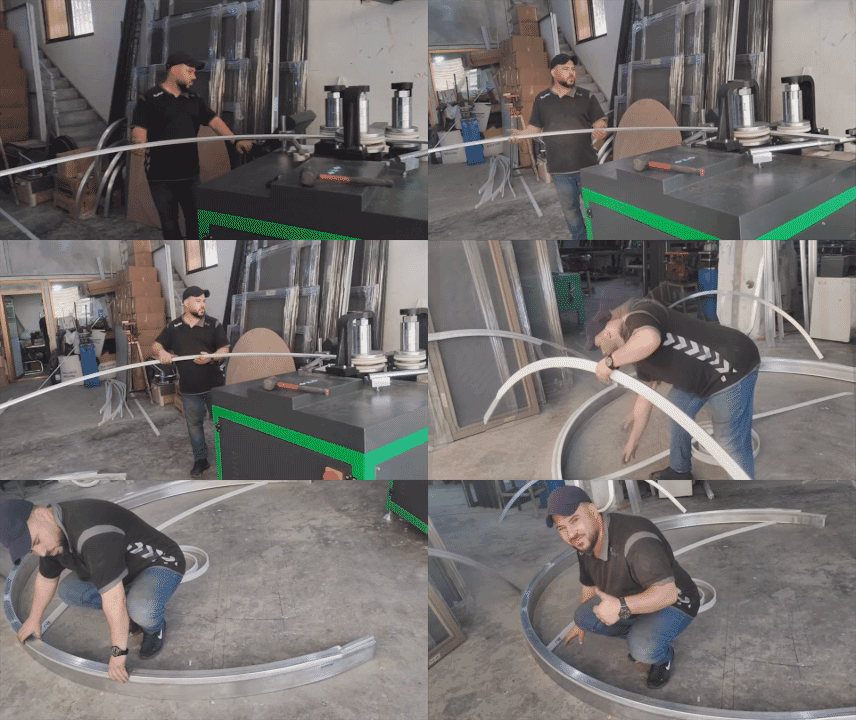
The Superplastic Forming Press employs advanced, flexible, and high-precision forming technology. This provides a reliable solution for shaping complex titanium components and processing difficult-to-form high-temperature aerospace alloys.
It finds application in critical sectors such as aerospace, defense, missile structures, jet engines, spacecraft, marine engineering, high-speed rail, and advanced automotive manufacturing.
The SPF-DB Series hydraulic presses offer exceptional versatility and precision, delivering unmatched zero-springback craftsmanship to meet demanding high-performance requirements. For instance, with integrated CNC parameter control and precise gas-pressure profiling, once engineered, complex titanium sandwich structures can be consistently reproduced with seamless atomic-level fusion.
Titanium superplastic forming and diffusion bonding accuracy depends on tight thermal uniformity, extreme pressure stability, and high structural rigidity.
TOP 3 CRITICAL FACTORS FOR PERFECT TITANIUM SUPERPLASTIC FORMING(SPF/DB)
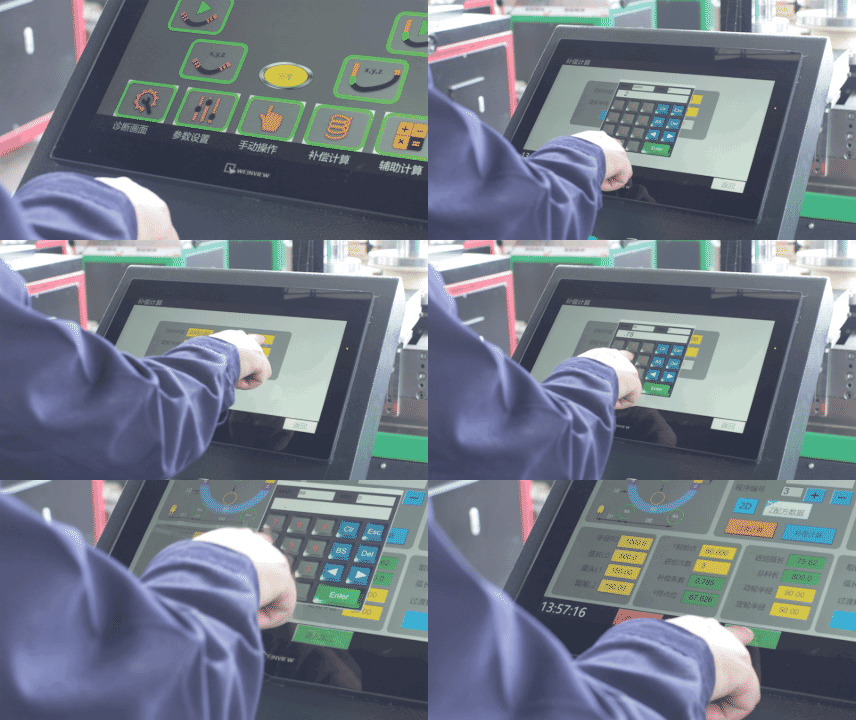
THERMAL UNIFORMITY & HEAT SHIELDING
Titanium superplasticity requires strict temperature control, as a variance over ±10℃ causes local thinning, cracking, or bonding failure.
Consequently, maintaining ultra-tight thermal uniformity is critical to achieving consistent wall thickness and defect-free atomic bonding.
In high-temperature processing, the key is to eliminate thermal fluctuations using a 300 mm ceramic insulation layer and active water-cooling system that keeps shell temperature rise under 25°C.
The SPF-DB Series addresses temperature sensitivity in two steps: a 42-zone independent heating platform controls localized heat, while 42 thermocouple feeds provide real-time feedback to lock accuracy within ±5°C across 500°C–950°C.
Note: BITAERON’s Superplastic Forming Press platform redefines thermal stability up to 1,100°C (1,050°C precise process window at ±5℃.

LOW-SPEED SERVO DRIVE & PRESSURE STABILITY
Under heavy tonnage (10,000 kN), slide movement at ultra-low speeds (0.2–4mm/s) easily induces stick-slip vibration, breaking gas seals and causing high-pressure argon leakage.
In high-tonnage forming, the key is to eliminate stick-slip vibration during long dwell times using electro-hydraulic servo drives and Bosch Rexroth high-precision valves.
The SPF-DB Series addresses pressure fluctuation by actively tracking tonnage in real time, locking pressure control accuracy within ±1% to match the set curve throughout the forming process.
Notes: Driven by advanced servo hydraulics, the platform delivers steady low-speed slide travel and pressure stability, unaffected by oil temperature variations under prolonged load.
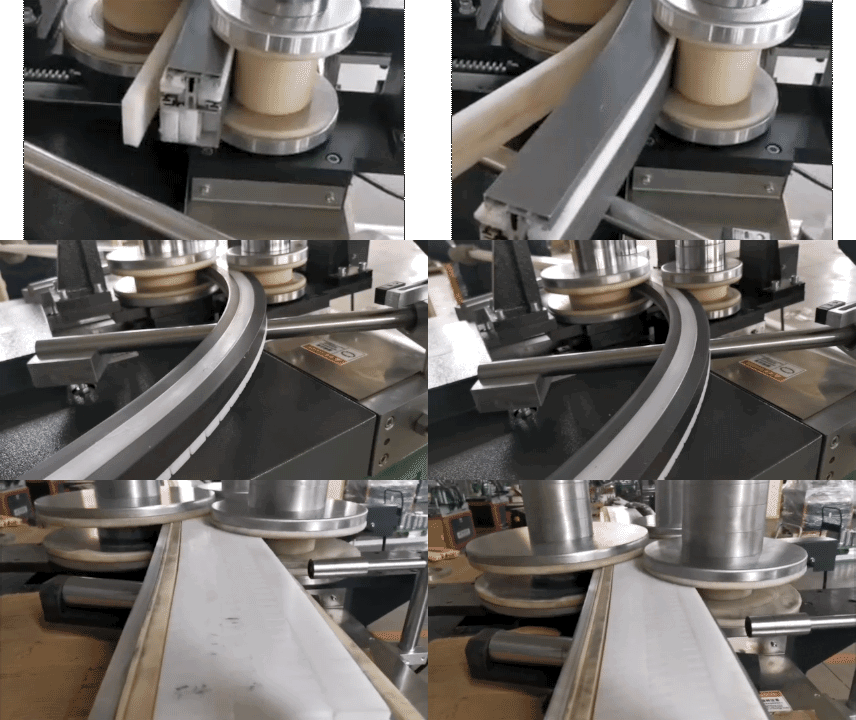
CROSS SECTIONAL DEVIATION
Diffusion bonding requires hours of high-pressure dwell at extreme heat, where any frame deflection causes platen misalignment, mold shifting, and uneven wall thickness.
Therefore, the focus is on maintaining absolute structural rigidity and platen parallelism to prevent deformation under continuous heavy loads.
In high-tonnage thermal processing, the key is to eliminate internal stress and frame distortion during extended dwell times.
Featuring a finite element analysis (FEA) optimized prestressed frame and heat-resistant alloy platens, BITAERON’s SPF-DB Series eliminates stress through welding aging treatments, locking platen parallelism at 0.025/300mm.
Unmatched Precision, Efficient, and Flexibility
ADVANTAGES OF THE SPF-DB SUPERPLASTIC FORMING PRESS
High-precision, ultra-rigid, and intrinsically safe, the SPF-DB Press Series redefines heavy industrial forming with six core technological advantages.
- Closed-Loop Servo Drive: Nominal force continuously adjustable from 300 to 10,000 kN (pressure precision ±1%). Ensures crawl-free, steady operation at micro-speeds of 0.2–4 mm/s.
- 42-Zone Digital Thermal & Vacuum/Gas Control: 42-zone independent heat control (500°C–1050°C, ±5°C precision) combined with 3-channel 4 MPa argon inflation (±0.01 MPa) and 3-channel vacuum extraction (<0.06 Pa).
- Dual Mold Safety Interlocks: Features zero-pressure downward closing with integrated mold protection, dual-support hydraulic safety valves on the main cylinder, and automatic ram locking to completely eliminate uncontrolled drops.
- Industrial Ethernet & Curve Tracking: Siemens S7-315 PLC logs real-time temperature, pressure, and displacement curves, featuring mistake-proof alarms, Ethernet integration, and 10-stage programmable P-t heating profiles.
- Ergonomic Control Console: Independent centralized console with mobile two-hand buttons (0.5–1s synchronization limit). An intuitive interface with pre-set parameters dramatically reduces reliance on highly skilled operators.
- Free Custom Tooling & Expert Services: Equipped with a motor-driven heavy-duty moving bolster (30-ton load capacity, ±0.05 mm repeatability) and built-in thermal sensor channels. Includes free custom mold design consulting, process debugging, and lifelong engineering support.

BITAERON
Growing in tandem with China’s historic economic transformation for over 20 years, BITAERON is a premier global provider of turn-key engineering solutions for advanced pressure-forming equipment.
We bridge the gap between material physics and high-performance production, covering the complete industrial spectrum from sheet metal and profile cold flexforming to extreme-temperature thermal processing and Superplastic Forming (SPF).
Backed by mature manufacturing expertise, BIT high-tonnage installations deliver the critical structural backbone for global high-stakes industries, including Aerospace, Aviation, Defense, Nuclear Power, Heavy Forging, Shipbuilding, and New Material processing.